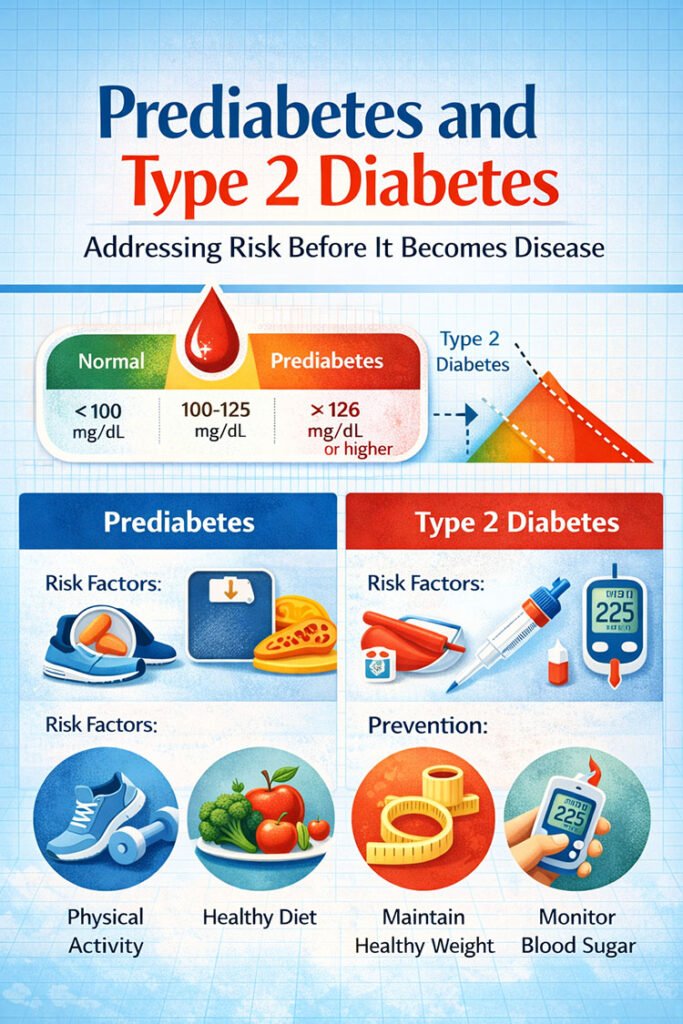
Prediabetes and Type 2 Diabetes: Addressing Risk Before It Becomes Disease
Introduction
Prediabetes and type 2 diabetes are among the most common—and most misunderstood—chronic health conditions today. Millions of adults are walking around with rising blood sugar and insulin resistance without realizing it, often feeling “mostly fine” until more serious complications develop. The good news is that both prediabetes and early diabetes are highly manageable, and in many cases reversible, when addressed early and thoughtfully.
At Elite Internal Medicine, we focus on identifying metabolic risk long before it escalates. Rather than waiting for numbers to cross an arbitrary threshold, we look at trends, lifestyle factors, and individual physiology to create a plan that protects long-term health while fitting into real life.
What It Is / Why It Matters
Prediabetes refers to blood sugar levels that are higher than normal but not yet in the diabetic range. It is a warning sign that the body is becoming resistant to insulin—the hormone responsible for moving glucose from the bloodstream into cells. Left unaddressed, prediabetes often progresses to type 2 diabetes.
Type 2 diabetes is more than a blood sugar problem. It is a systemic condition that increases the risk of heart disease, stroke, kidney disease, nerve damage, vision loss, and cognitive decline. Many of these complications begin developing years before diabetes is formally diagnosed.
The importance of early intervention cannot be overstated. Addressing insulin resistance early reduces long-term cardiovascular risk, preserves metabolic flexibility, and often prevents the need for escalating medication. Common sense preventative care allows us to intervene when the condition is still highly responsive to lifestyle and targeted treatment.
How It’s Diagnosed and Evaluated
Traditional screening often relies on fasting glucose or hemoglobin A1c alone. While these are important, they do not always tell the full story—especially in early disease.
At Elite Internal Medicine, evaluation may include a combination of fasting glucose, A1c, lipid markers associated with insulin resistance, and inflammatory indicators. We also consider body composition, blood pressure, sleep patterns, stress, and family history.
Equally important is understanding trajectory. A “normal” lab value that has been steadily rising over several years can be more concerning than a single mildly elevated result. Concierge medicine allows for this type of longitudinal analysis, helping identify risk early and respond proactively rather than reactively.
Treatment and Lifestyle Guidance
Management of prediabetes and type 2 diabetes is highly individualized. The foundation is almost always lifestyle-based, with a focus on improving insulin sensitivity rather than simply lowering glucose numbers.
Nutrition guidance emphasizes blood sugar stability, metabolic health, and sustainability—not extreme restriction. Physical activity plans are designed to support muscle mass, insulin sensitivity, and cardiovascular health, often prioritizing consistency over intensity. Sleep quality and stress management play a critical role and are addressed as part of the overall plan.
When medication is appropriate, it is used strategically and thoughtfully. The goal is not simply to “treat numbers,” but to improve underlying physiology while minimizing side effects and long-term dependence whenever possible.
Dr. Clemens’ Concierge Approach
Prediabetes and diabetes management require time, education, and ongoing adjustment—elements that are often missing in traditional care. In a concierge model, we have the ability to dig deeper, monitor progress more closely, and adapt treatment as your body responds.
Patients have direct access for questions, quicker follow-up on labs, and longer visits to fully understand their results and options. This allows for earlier course correction, better adherence, and more confidence in decision-making.
Serving patients throughout the Denver area and surrounding suburbs, Elite Internal Medicine focuses on preventing disease progression, reducing long-term complications, and helping patients regain control of their metabolic health.
Taking the Next Step
If you’ve been told you have prediabetes, borderline labs, or type 2 diabetes—or simply want a clearer understanding of your metabolic health—concierge medicine offers a more proactive path forward. I invite you to schedule a consultationor learn more about how Elite Internal Medicine approaches personalized, preventative care.