Cancer Screenings: Detecting Problems Before Symptoms Appear
Introduction
Cancer screening is one of the most powerful tools in modern preventative medicine. Many cancers develop slowly and silently, often without symptoms until later stages when treatment becomes more complex. Screening allows us to identify abnormalities early — sometimes even before cancer develops — when outcomes are typically far better.
At Elite Internal Medicine, cancer screening is not approached as a one-size-fits-all checklist. Instead, recommendations are tailored to each patient’s age, family history, lifestyle, and risk profile. Thoughtful screening balances early detection with avoiding unnecessary testing. The goal is simple: identify meaningful risk early while keeping care practical, evidence-based, and personalized.
What It Is / Why It Matters
Cancer screenings are tests performed before symptoms appear to detect cancer or precancerous changes. When cancers are found early, treatment is often simpler, less invasive, and more successful.
Screening has dramatically improved outcomes for several major cancers, including colon, breast, cervical, prostate, and lung cancer in appropriate populations. In many cases, screening prevents cancer entirely by identifying precancerous changes before they progress.
The challenge is knowing which screenings matter most for each individual and when to perform them. Too little screening risks missed diagnoses; too much screening can lead to unnecessary anxiety and procedures. Common sense preventative care focuses on the right screening at the right time.
How It’s Diagnosed and Evaluated
Cancer screening recommendations vary based on age, biological sex, medical history, family history, and risk factors such as smoking or environmental exposure.
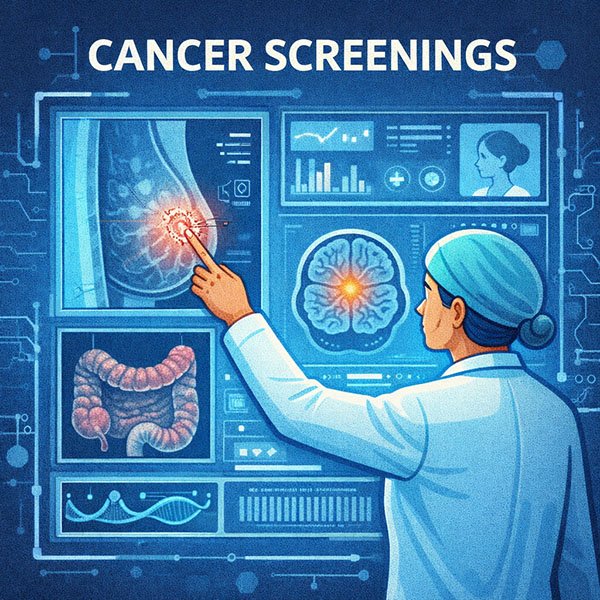
Common screening tools include colonoscopy or stool-based testing for colon cancer, mammography for breast cancer, cervical cancer screening through Pap testing and HPV evaluation, prostate-specific antigen (PSA) testing when appropriate, and low-dose CT scanning for lung cancer in higher-risk individuals. Newly developed blood tests known as multi-cancer early detection (MCED) tests are also available and undergoing further study. These tests look for a unique fingerprint of cancer by analyzing methylation patterns of cell-free DNA. It is exciting to see how breakthrough technologies will advance and improve our ability to identify more cancers at earlier stages.
At Elite Internal Medicine, screening decisions are individualized. We review family history carefully, discuss evolving guidelines, and consider risk tolerance when choosing screening strategies. Concierge medicine allows for deeper conversations around screening options, benefits, limitations, and timing—ensuring patients understand why each test is recommended.
Treatment and Lifestyle Guidance
While screenings detect disease, prevention strategies reduce risk. Lifestyle factors play a meaningful role in cancer prevention, including maintaining a healthy weight, avoiding tobacco exposure, moderating alcohol use, staying physically active, and eating a balanced diet rich in whole foods.
Vaccination is also an important preventive tool in certain cancers, particularly HPV vaccination for cervical and other HPV-related cancers.
When screening results are abnormal, coordination of follow-up care becomes essential. A proactive primary care physician helps guide next steps, interpret results, and connect patients with appropriate specialists when needed.
The goal is not simply testing—it is thoughtful prevention combined with coordinated care.
Dr. Clemens’ Concierge Approach
Cancer screening decisions are personal, and they deserve time for discussion and context. In a concierge practice, we are able to review screening timelines carefully, revisit recommendations as guidelines evolve, and respond quickly when testing is needed.
Patients have direct communication, longer visits, and consistent follow-up to ensure screenings are completed on schedule and results are clearly understood. This continuity helps reduce missed screenings and unnecessary duplication of tests.
Serving patients throughout the Denver suburbs, Elite Internal Medicine emphasizes prevention, early detection, and patient education as central components of long-term health.
Staying Ahead of Risk
Cancer screening is not about fear—it’s about preparation. When done thoughtfully, it provides reassurance, early detection, and the opportunity to act before disease progresses. If you’d like to review your screening schedule or develop a personalized prevention plan, Elite Internal Medicine is here to help you stay ahead of risk.